
Foundations That Stay Dry Through Every Season
Foundation Waterproofing in Portland for basements and crawlspaces threatened by persistent moisture intrusion
Portland's winter rainfall and high water table create consistent pressure against foundation walls, forcing water through cracks, joints, and porous concrete. Atomic Construction handles foundation waterproofing that addresses both the exterior and interior pathways water uses to enter below-grade spaces. The work stops active seepage, prevents structural deterioration from prolonged moisture contact, and eliminates the conditions that lead to mold growth on framing and stored materials.
Foundation water intrusion happens when hydrostatic pressure builds up in saturated soil and pushes water through any available opening, including mortar joints, foundation cracks, and the cold joint where the footing meets the wall. Interior waterproofing solutions intercept water once it passes through the wall, channeling it to drainage systems before it spreads across the floor, while exterior waterproofing prevents water from contacting the foundation wall in the first place by installing membrane barriers and perimeter drainage during excavation.
Schedule an on-site assessment to identify how water is entering your foundation and which waterproofing approach fits your site conditions.
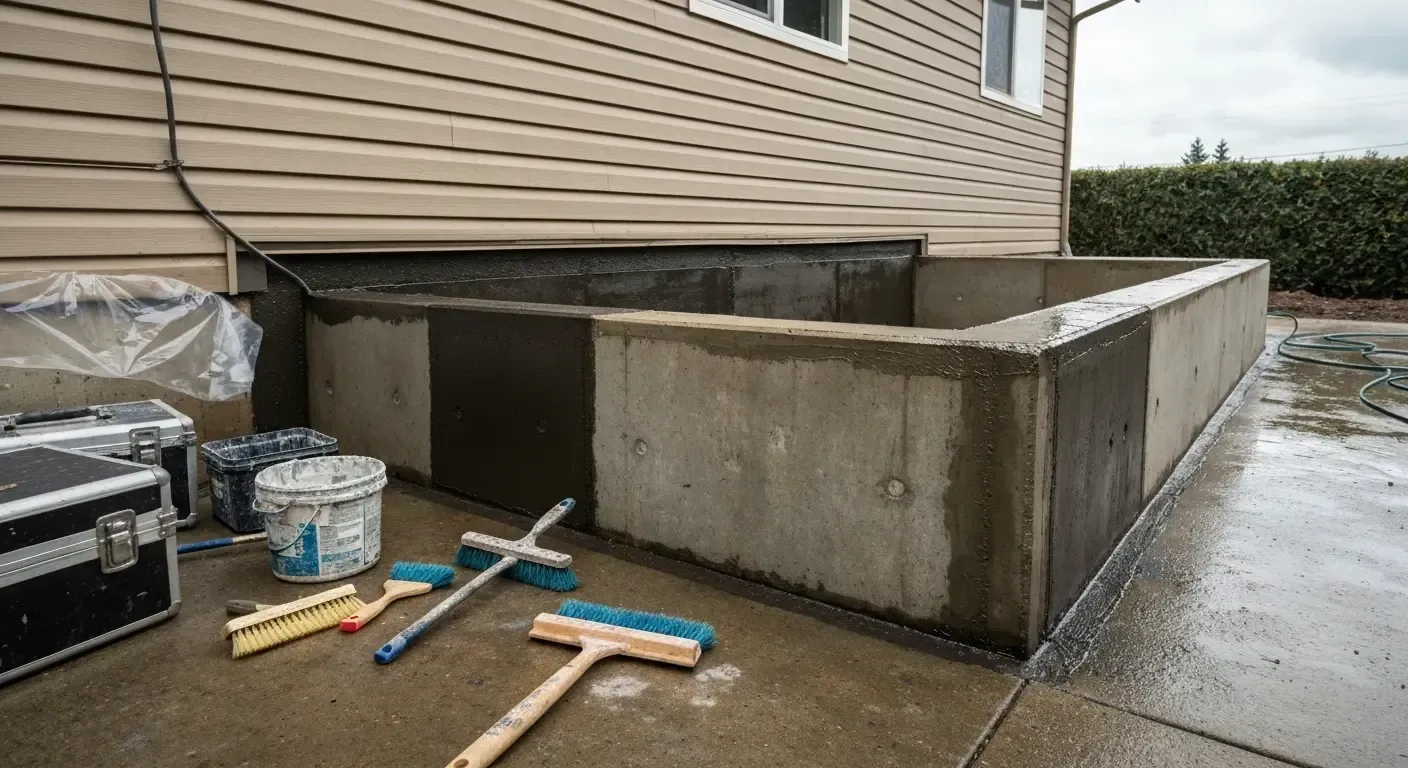
What Proper Waterproofing Prevents Long-Term
The waterproofing process begins with an evaluation of your foundation's condition, soil drainage patterns, and the severity of existing water intrusion. Exterior waterproofing requires excavating along the foundation perimeter, cleaning the wall surface, applying rubberized membrane or spray-applied waterproofing coatings, and installing perforated drain pipe at the footing level to carry water away before it can build pressure. Interior systems involve installing perimeter drainage channels along the foundation floor, directing collected water to a sump basin, and sealing wall penetrations where utilities enter.
After waterproofing is complete, you'll notice that floors stay dry during heavy rainfall, musty odors disappear from below-grade rooms, and efflorescence—the white mineral deposits that form on damp concrete—stops appearing on foundation walls. Storage items no longer develop mildew, and the air quality throughout the home becomes noticeably fresher as moisture vapor stops migrating upward through floor assemblies.
Portland-area homes face additional challenges from expansive clay soils that retain moisture and exert shifting pressure against foundation walls, making early waterproofing intervention critical before minor seepage escalates into structural cracking. The system installed depends on whether your foundation shows active structural movement, whether exterior access is feasible given landscaping and hardscaping, and whether you need immediate moisture control or comprehensive long-term protection.
Questions Property Owners Usually Ask
Homeowners preparing for waterproofing work often ask about methods, timing, and what the project involves for their specific foundation type.
What causes water to enter through foundation walls even when there are no visible cracks?
Water passes through porous concrete and mortar joints under hydrostatic pressure, especially in older Portland foundations built before modern waterproofing standards, without needing an obvious crack to create a pathway for seepage.
How does exterior waterproofing differ from interior drainage systems?
Exterior waterproofing stops water before it contacts the foundation wall by applying membrane barriers and installing footing drains during excavation, while interior systems manage water after it passes through the wall by collecting and redirecting it to a sump pump.
When should waterproofing be done relative to other foundation work?
Waterproofing is most effective when completed after any necessary foundation repairs are finished, so structural cracks are sealed and walls are stabilized before moisture barriers are applied.
What maintenance does a waterproofing system require after installation?
Exterior systems require minimal maintenance once installed, though gutters and downspouts must continue directing roof water away from the foundation, while interior sump pumps need annual testing and occasional replacement of check valves.
How do Portland's soil conditions affect waterproofing decisions?
The region's heavy clay soils retain water longer than sandy soils, keeping hydrostatic pressure elevated for extended periods and making perimeter drainage systems essential components of any effective waterproofing plan.
Atomic Construction evaluates foundation conditions throughout Portland and develops waterproofing solutions based on your home's age, soil characteristics, and existing drainage infrastructure. Request a foundation inspection to determine which waterproofing method provides the protection your below-grade spaces need.